How to Choose a Peeler (and Why Most Kitchens Need Two)
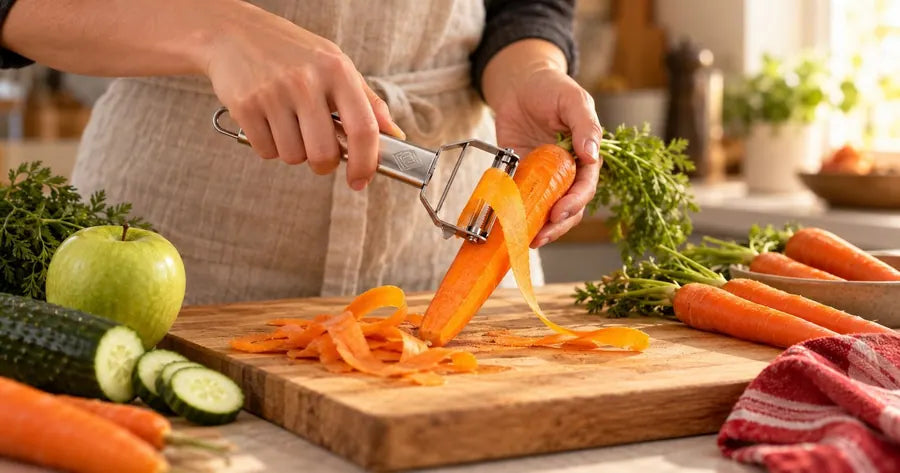
A peeler is one of the tools you reach for most, and one of the few you almost never think about until it slips, clogs or tears the fruit. It sits in the drawer for years, and because it still technically works, it never gets replaced. That is a shame, because peeling is the first step of a huge number of everyday recipes, from a weeknight potato side to a fruit plate for guests.
This guide covers what actually matters when you choose a peeler, followed by a short self-check you can run on the one in your drawer right now.
1. Match the blade to the produce
Firm vegetables such as carrots, potatoes, cucumbers and apples need a blade that glides and holds its edge. Soft, thin-skinned fruit such as ripe tomatoes, peaches and kiwi needs a finer or serrated edge that cuts the skin without crushing the flesh. One blade rarely does both jobs well, which is why many cooks keep two peelers: one for hard produce and one for soft.
2. Know the main types
Not every peeler is built the same way, and knowing the basic types makes it easier to pick the right one:
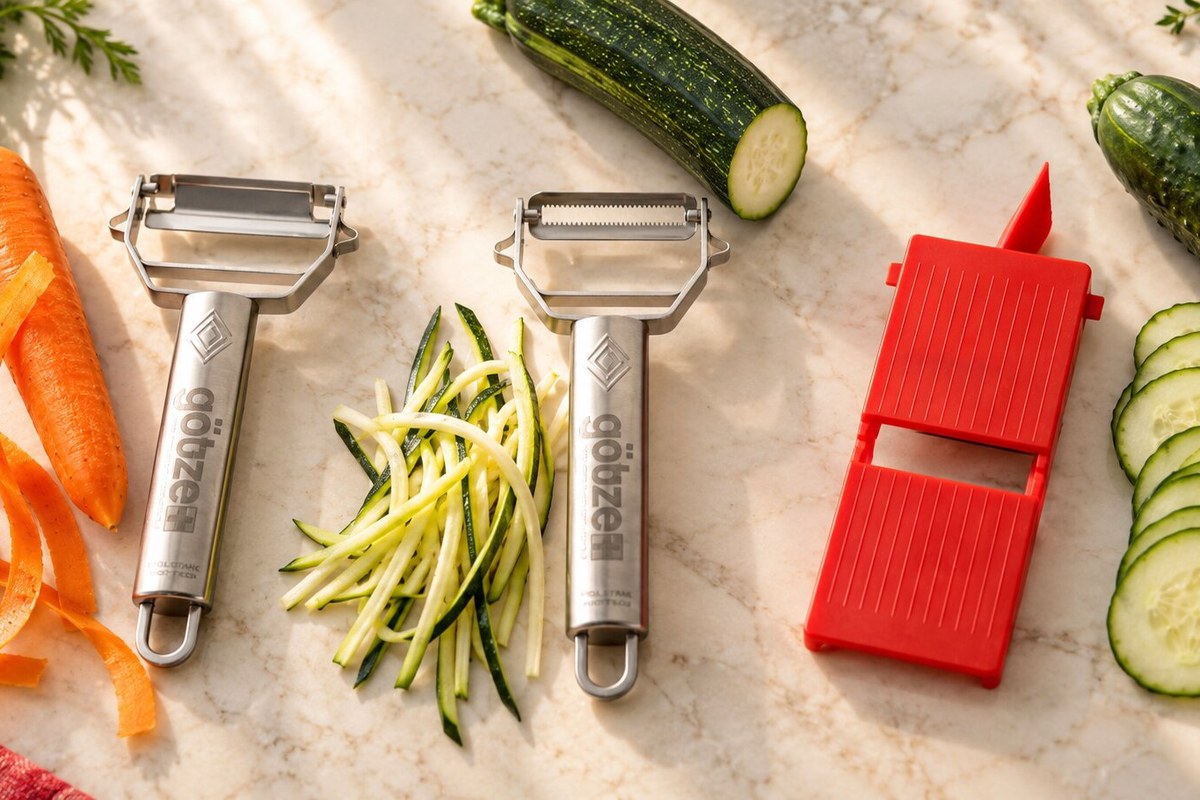
- Y-peeler. A wide, comfortable shape that suits firm produce like carrots, potatoes and squash. Some Y-peelers, including ours, peel in both directions, so you do not have to lift the blade and reset between strokes.
- Straight (swivel) peeler. The classic style, with the blade in line with the handle. A familiar choice for everyday jobs.
- Julienne peeler. Instead of a smooth ribbon, it cuts thin, even strips. It turns carrots, zucchini and cucumbers into slaw and salad ingredients in a few strokes.
- Serrated peeler. Made for slippery, thin-skinned fruit like tomatoes and peaches.
- Mini slicer. Not a peeler in the strict sense, but a natural companion. It gives you even, uniform slices when you need them.
3. Check the grip, not just the blade
You may hold a peeler for several minutes at a time when you are prepping for a family meal, and your hand does most of the work. A handle that fits your hand, does not dig into your palm and stays steady when wet matters more than any feature printed on the box. If you can, hold it before you buy it, and imagine peeling a whole bag of carrots with it.
4. Look at the swivel
Round and uneven produce such as apples, potatoes and kohlrabi is not flat. A blade that pivots to follow the curve keeps contact with the surface, removes less flesh and needs fewer passes. A blade that does not pivot makes you fight the shape of the produce. Try any peeler on something round before you decide.
5. Consider the material and how you clean it
Look for a stainless steel blade, and think about how you wash your tools. If you run a lot of loads through the dishwasher, a dishwasher-safe peeler saves you a task. All of our peelers are dishwasher safe, and can also be washed by hand with warm water and mild dish soap.
6. Think about the whole job
Peeling is only one step. Many cooks also want a clean way to cut julienne strips, make even slices, or core and trim fruit. Choosing tools that work together saves drawer space and keeps the whole task simple, from first cut to final plate.
Is it time to replace yours? Ask yourself these questions
Take out the peeler you use at home and answer honestly:
- Does it drag or skip instead of gliding across the skin?
- Do you have to press hard to get a clean peel?
- Does it tear soft produce like tomatoes or peaches instead of cutting the skin cleanly?
- Do you make several passes over the same spot, or leave patches of skin behind?
- Does the handle slip when your hands are wet, or tire your hand halfway through a bag of carrots?
- Is the blade loose or wobbly, or does it rattle when you tap it?
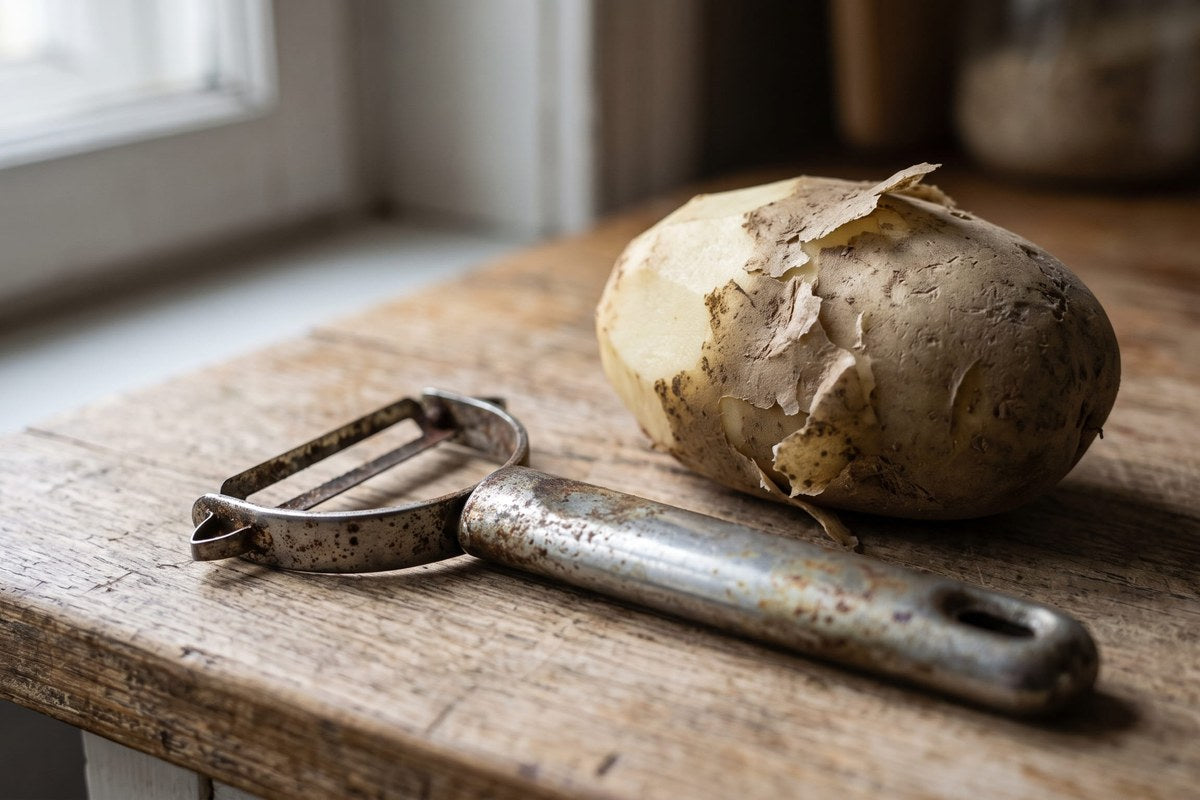
- Can you see rust spots, nicks or a bent edge on the blade?
- Does it clog with peel every few strokes?
- Do you grab a knife instead because the peeler is more trouble than it is worth?
- Can you not remember buying it? If it came with a starter kitchen or was a gift years ago, it has probably been working harder than it should for a long time.
If you answered yes to even two or three of these, your peeler is making everyday prep harder than it needs to be. If you answered yes to question 6 or 7, replace it rather than keep using it, since a loose or damaged blade is also a safety issue.
A simple rule
If you cook a few times a week, own one peeler for firm produce and one for soft, and add a julienne peeler if you like slaws and salads. Replace any of them when they start to drag, tear or wobble. A good peeler is not an expensive tool, and the difference shows up every time you cook.
Where to start
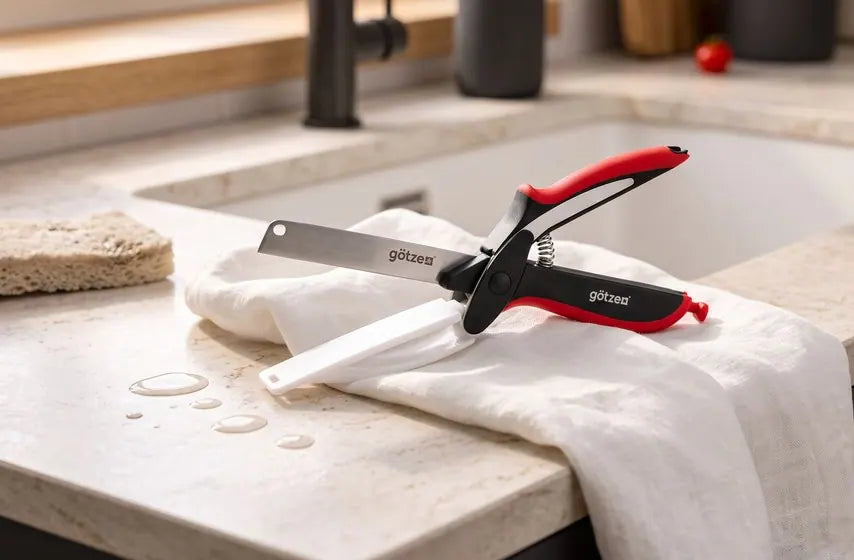
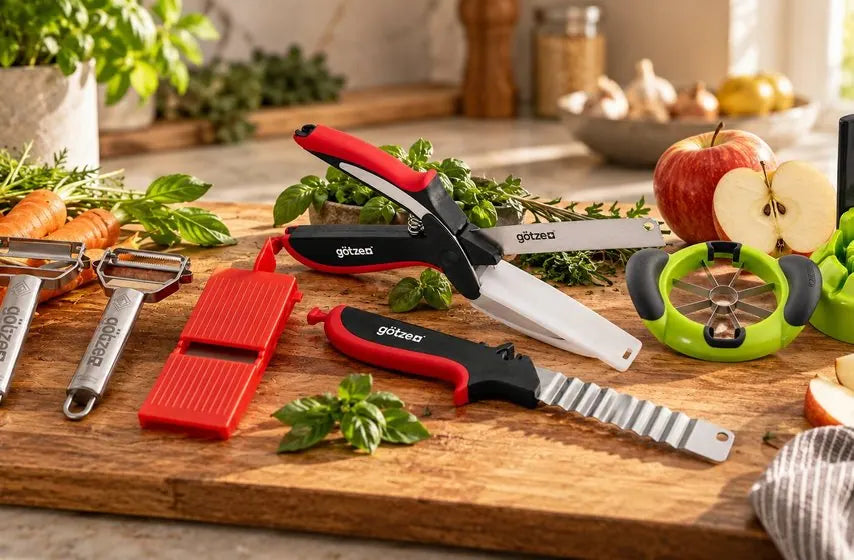
Our peeler set brings together a professional Y-peeler that peels in both directions, a julienne peeler for thin strips and a red mini slicer for even slices, all in stainless steel and all dishwasher safe. You can find it in the Limited Bundle, together with our 3-in-1 Kitchen Shears and crinkle-cut knife.
Related: Limited Bundle → · Fruit Peeler Bundle (for pineapple and watermelon) →